
You woke up, checked your phone, played music, commuted to work—or maybe just headed to the kitchen—shopped online, and scrolled your social feed before bed. It all seemed perfectly normal.
But it wasn’t.
Artificial intelligence was quietly at work behind the scenes almost every moment—predicting, filtering, recommending, and making choices—so seamlessly that you barely noticed. This isn’t some futuristic fantasy. It’s just a regular Tuesday.
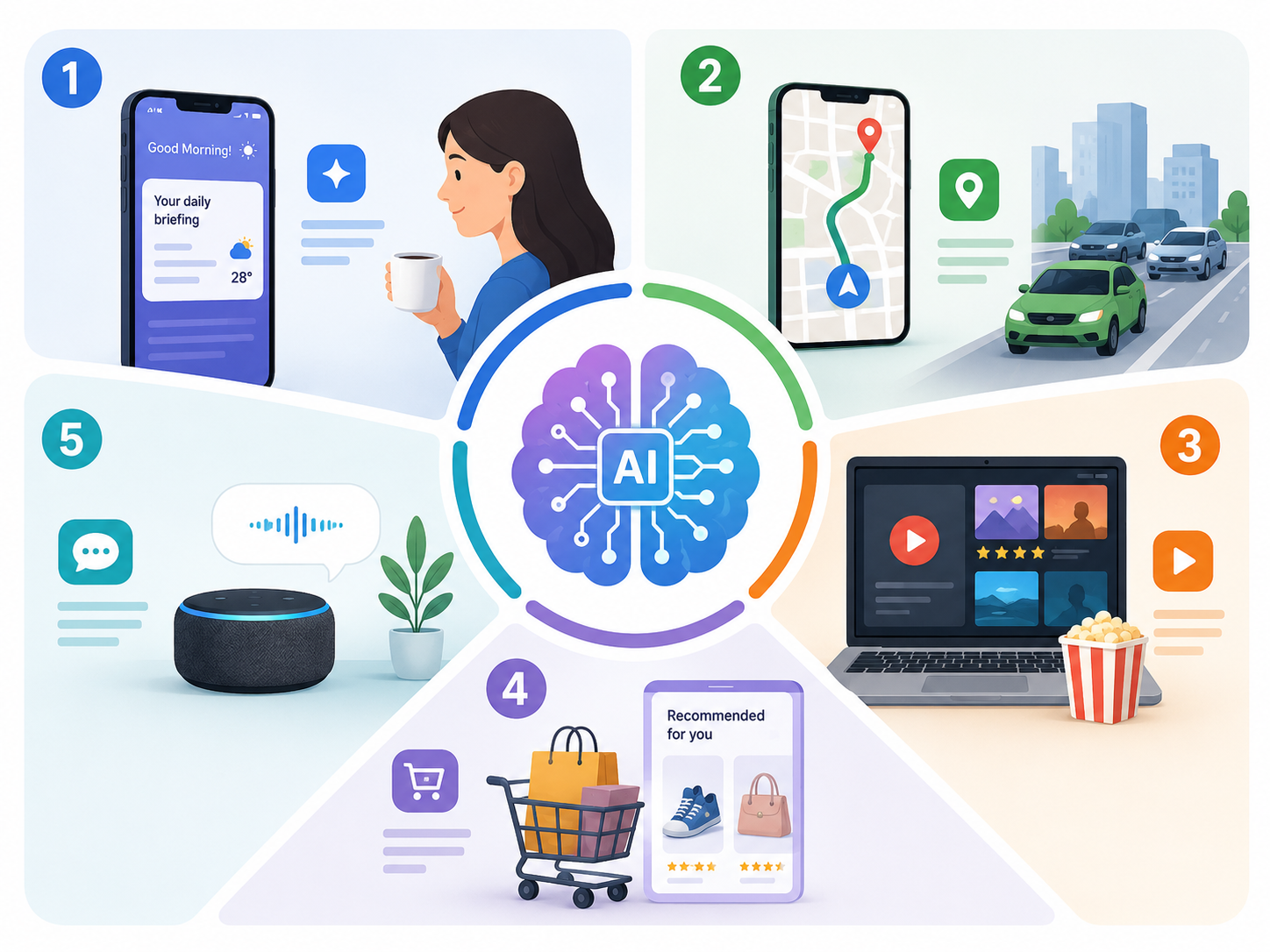
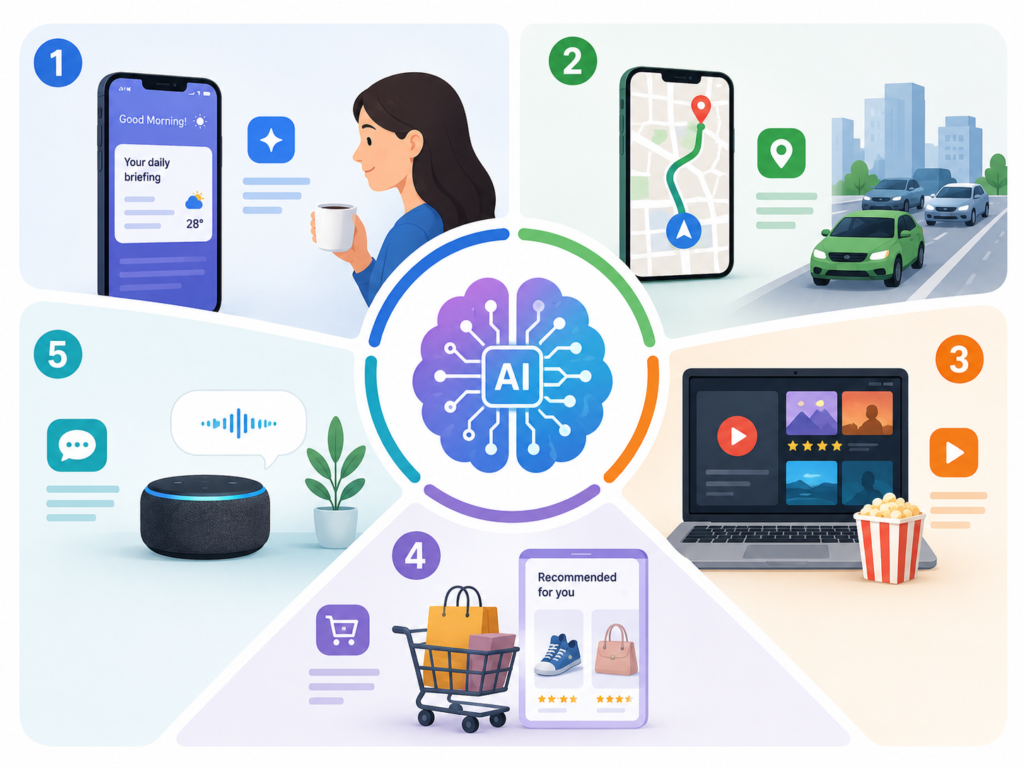
Here are five ways AI is already orchestrating your day—often without you realizing.
1. Your Alarm Went Off — and AI Chose What You Saw First
Your day started the minute you unlocked your phone. Every app—your news, Instagram, Gmail—relies on AI to prioritize what appears. These algorithms track your taps, pauses, and skips to decide what fills your screen.
Gmail’s Smart Inbox, for example, uses machine learning trained on billions of emails to figure out what’s important to you. That newsletter dumped in Promotions? Thank AI. The urgent client email at the top? Also AI.
You didn’t organize your morning. An algorithm did.
2. Your Music Matched Your Mood Instantly
You launched Spotify, YouTube Music, or Apple Music, and the playlist just fit. How?
Spotify’s recommendation engine weighs over 100 factors—time, listening speed, skips, and even the tempo and key of songs you repeat. It compares your habits to millions of others and delivers new songs you’re likely to enjoy.
That’s collaborative filtering and deep learning at work—so effective, most people think it’s just good taste. Maybe it is, but AI is the silent DJ.
Netflix uses similar tech to decide which thumbnail you see (users get different images), and YouTube picks your next autoplay video the same way. Every queue, autoplay, and “You might also like” is AI spinning the tracks in your entertainment life.
3. You Got Where You Needed — Thanks to AI’s Traffic Forecasts
Remember printing out directions from Google Maps? Now you say “navigate home,” and your phone guides you around jams you never even knew about.
Google Maps and Apple Maps deploy real-time AI to forecast traffic before it happens. They pull from millions of users, past patterns, accidents, weather, events, and construction data, then use predictive models to spot congestion—sometimes 20 minutes ahead—and reroute you.
That shortcut through a side street? AI saw 340 other drivers on the main route and diverted you to avoid the logjam.
You didn’t navigate. AI did. You just drove.
4. You Didn’t Get Scammed — Because AI Blocked It
You won’t get a notification for this, but it happens countless times daily.
Each time you make an online payment, your bank’s AI fraud detection instantly scores the transaction—reviewing your location, merchant, amount, timing, and spending patterns against known scams. If something’s off, it flags or blocks it before you notice a thing.
Your email provider works similarly. Gmail uses AI to block over 100 million phishing emails every day, flagging suspicious links, fake senders, and manipulative language.
You didn’t have to defend yourself. AI did it—quietly and constantly.
5. You Shopped — and AI Predicted It
Log onto Amazon, Flipkart, or any major online store.
The homepage is tailored for you before you type a word. Featured products, deals, “frequently bought together” bundles—all come from recommendation AIs trained on your shopping and browsing data, wish lists, and even how long you linger on a product.
Amazon’s engine reportedly drives nearly 35% of its sales. It’s not just showing popular items; it’s predicting what you’re most likely to buy, often before you realize it yourself.
Searched last week and didn’t buy? That item followed you around the web in ads. Not a coincidence—AI is patiently waiting for you to return.
What Does This Mean for You?
AI isn’t on its way. It’s already embedded in everyday life—often helpful, sometimes eerie, and increasingly inseparable from how we live.
Those who succeed in the coming years won’t ignore or fear AI—they’ll learn how it works, use it purposefully, and build skills around it.
You’re already living with AI. Now it’s time to start working alongside it.